
✓ Written by: Justin Norris, Co-Founder of LIT Method
✓ Verified by Expert Contributor: Samantha Becker, Copywriting Specialist
✓ Fitness Expert: Wes Okerson, NASM Certified Personal Trainer
The most reliable way to get your first 100 members for a recovery center is to start selling memberships before your doors open. By running a presale during construction — a high-converting landing page, a founding membership offer, organic social content, and an automated email capture flow — operators can cover fixed costs before opening day and walk into the grand opening with a paid waitlist already in place. Recovery District in West Covina, California used this framework to add 75 founding members in their first 30 days of opening, hitting a $90,000 annual run rate from membership revenue alone.
This guide walks through the four-step framework: build the landing page, structure the presale offer, run organic social to drive traffic, and automate email follow-up to convert captures into paid founding members.
Operators who run presale well…
- Cover fixed costs during construction before a single session is sold
- Walk into opening day with a paid waitlist already in place
- Hit 100 members on or before opening day — not 6 to 12 months after
- Build a founding member base with dramatically higher retention than post-open signups
- Generate recurring monthly revenue from day one of operations
Operators who skip presale typically…
- Take 6 to 12 months to reach 100 members
- Open with no revenue base and rely entirely on post-open marketing spend
- Miss the construction window — free runway that cannot be recovered
- Lose the most loyal customer cohort: people who believed in the concept before seeing the space
Who this guide is for
This guide is for studio operators opening a recovery center built around contrast therapy (sauna and cold plunge), red light therapy, or related wellness modalities. It applies whether you are opening a single-location boutique studio, a franchise location, or a wellness wing inside a larger gym or spa. The framework assumes you have a signed lease (or are about to sign one) and 60 to 120 days of construction ahead — which is exactly when presale should start.
LIT Method is the publisher of this article. The framework documented here is drawn from observed launches of recovery studios, including Recovery District in West Covina, California, which was supported by the LIT Method team during buildout and presale. Specific results vary by market, operator execution, and category awareness in the local area.
Why presale matters before construction
Most studio operators wait until construction is done to start marketing. That is a mistake for three reasons.
- The construction window is free runway. Every week of that 60 to 120 days spent selling memberships is revenue you would not otherwise have. Once construction ends, the clock starts on rent, utilities, and payroll — you want paying members before that happens.
- Presale customers are your most loyal customers. They bought into the concept before seeing the space. Founding member retention rates typically run 2 to 3 times higher than retention for members who join after opening.
- Presale revenue can cover fixed costs during build-out. Operators who sell enough founding memberships to cover rent and utilities during construction walk into opening day cash-flow positive instead of behind.
Operators who run presale well typically hit 100 members on or before opening day. Operators who skip presale typically take 6 to 12 months to reach the same number.
Step 1: Build a high-converting landing page
Your landing page is the single most important asset in the presale framework. Every social post, every ad, and every email points back to it. The page should tell potential members exactly what you offer, what makes you different, and how to get on the founding membership list.
Hero image
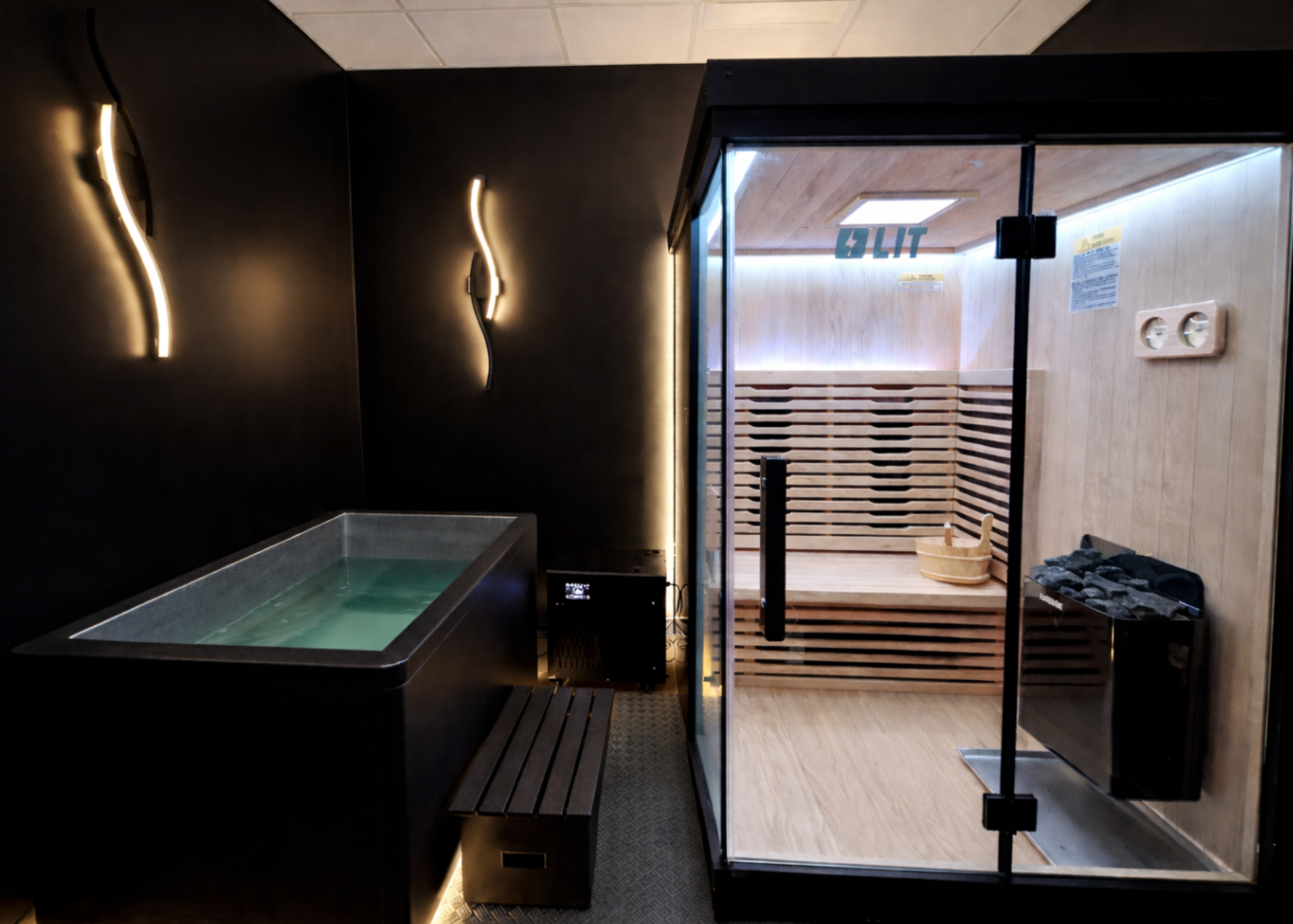
If you are offering contrast therapy, the hero image should show a sauna and cold plunge together — ideally a high-quality photo that communicates the experience the customer will have. Renderings work if construction is not done; real photography from a similar space works better. Avoid stock photography of people in towels — it reads as generic and lowers conversion.
Headline
This is your brand promise in one sentence. It should answer the question "why would I come here?" without listing services. Strong headlines focus on the outcome (recovery, energy, sleep, performance) rather than the equipment. Weak headlines list features ("sauna, cold plunge, red light therapy in [city]"). The headline goes directly under or over the hero image, large enough to read on mobile without scrolling.
How we help you
A short section that names the pain points your target member has — soreness from training, poor sleep, chronic stress, slow recovery — and frames your studio as the solution. Three to five pain points, each with a one-sentence description, is enough. This is where you build emotional connection.
Your services
A breakdown of each service with a short explanation of what the customer experiences. For contrast therapy, walk through the protocol: how long in the sauna, how long in the cold plunge, how many cycles per session. Customers researching recovery centers want to know what a session actually looks like before they commit.
Email capture form
Above the fold, with a clear value exchange: "Join the waitlist, get a free session when we open." Every page on the site should have this form, not just the homepage. The form is the single most important element on the landing page — it is what turns anonymous traffic into a list you can market to for the next 90 days.
Step 2: Structure your presale offer
Build your presale offer before you sign your lease. The offer needs to be strong enough that customers say yes to a studio that does not exist yet. Three principles drive a strong presale offer: a real discount, real urgency, and real retention mechanics.
Founding membership discount
Founding memberships should be priced at roughly % off your eventual full retail rate. This drives maximum interest and signals to early customers that they are valued for believing in the concept before opening day.
Step 3: Run organic social media to drive landing page traffic
Social media is the most cost-effective traffic source during presale. The goal is not to sell memberships directly from social — the goal is to drive traffic to your landing page, where the email capture form does the conversion work.
Founder and brand story
The most powerful organic content during presale is the founder story. Tell potential members why you started the studio, what makes your concept different, and what you personally believe about recovery. This builds emotional connection in a way that product-feature content does not. Post the founder story across Instagram Reels, TikTok, and LinkedIn (if your market has a professional audience).
Educational content on the modalities
Post short-form content explaining the science and benefits of cold plunge, sauna, red light therapy, and contrast protocols. Each post should identify a problem (poor sleep, slow recovery, chronic inflammation, low energy) and show the modality as the solution. This content builds your brand as a category authority and educates customers who may not know what contrast therapy is.
Pro tip: boost top organic posts
When a post performs well organically — high shares, comments, saves — boost it with a small ad budget targeted to a 20-mile radius around your studio location. Boosting an already-validated post is dramatically more efficient than running cold ads from scratch. Make sure every boosted post drives traffic to your landing page and email capture form, not to your social profile.
Step 4: Automate email flows to convert captures into paid members
Capturing emails is only half the work. The automated email flow is what turns a free-session signup into a paid founding member. Without an email flow, most captures go cold within two weeks.
5-email automation sequence
| Subject | Send timing | Goal | |
|---|---|---|---|
| Email 1 | Welcome & free session confirmation | Immediately on signup | Confirm free session, set opening date expectations, introduce the founder |
| Email 2 | Education on contrast therapy | 2 to 3 days after signup | Move customer from "curious about the free session" to "interested in a membership" |
| Email 3 | Founding membership offer | 5 to 7 days after signup | Present membership tiers, explain limited allocation and grandfathered pricing — this is the conversion email |
| Email 4 | Urgency reminder | 10 to 14 days after signup (non-purchasers only) | Reference remaining allocation ("12 of 50 founding memberships claimed") and grandfathered pricing benefit |
| Email 5 | Last call | When allocation is 80% sold | Drive final conversions before the founding offer closes |
Most studio operators use Klaviyo, Mailchimp, or Flodesk to run the sequence — any of the three will work for a single-location studio. The flow runs entirely on autopilot once built.
Realistic pre-launch timeline
Operators who execute this framework well typically hit 100 members on or before opening day. A realistic 90-day timeline:
90-day presale timeline
| Phase | Key actions | Goal |
|---|---|---|
| Days 1–14 | Build landing page, set up email capture, write 5-email automation, define founding offer, lock photography or renderings | All assets ready to launch |
| Days 15–30 | Launch landing page. Begin posting founder story and educational content on social. Drive initial traffic. | 200 to 400 email captures |
| Days 31–60 | Continue social. Boost top-performing organic posts. Open founding membership sales. | 25 to 40 founding memberships sold |
| Days 61–90 | Send urgency and last-call emails. Host soft-opening event for founding members (creates social proof and shareable content). | 50 to 100 founding memberships by opening day |
Numbers vary by market. A dense urban market with strong demand for recovery services will hit the higher end; a smaller market or one without existing category awareness will hit the lower end.
Case study: Recovery District in West Covina, California
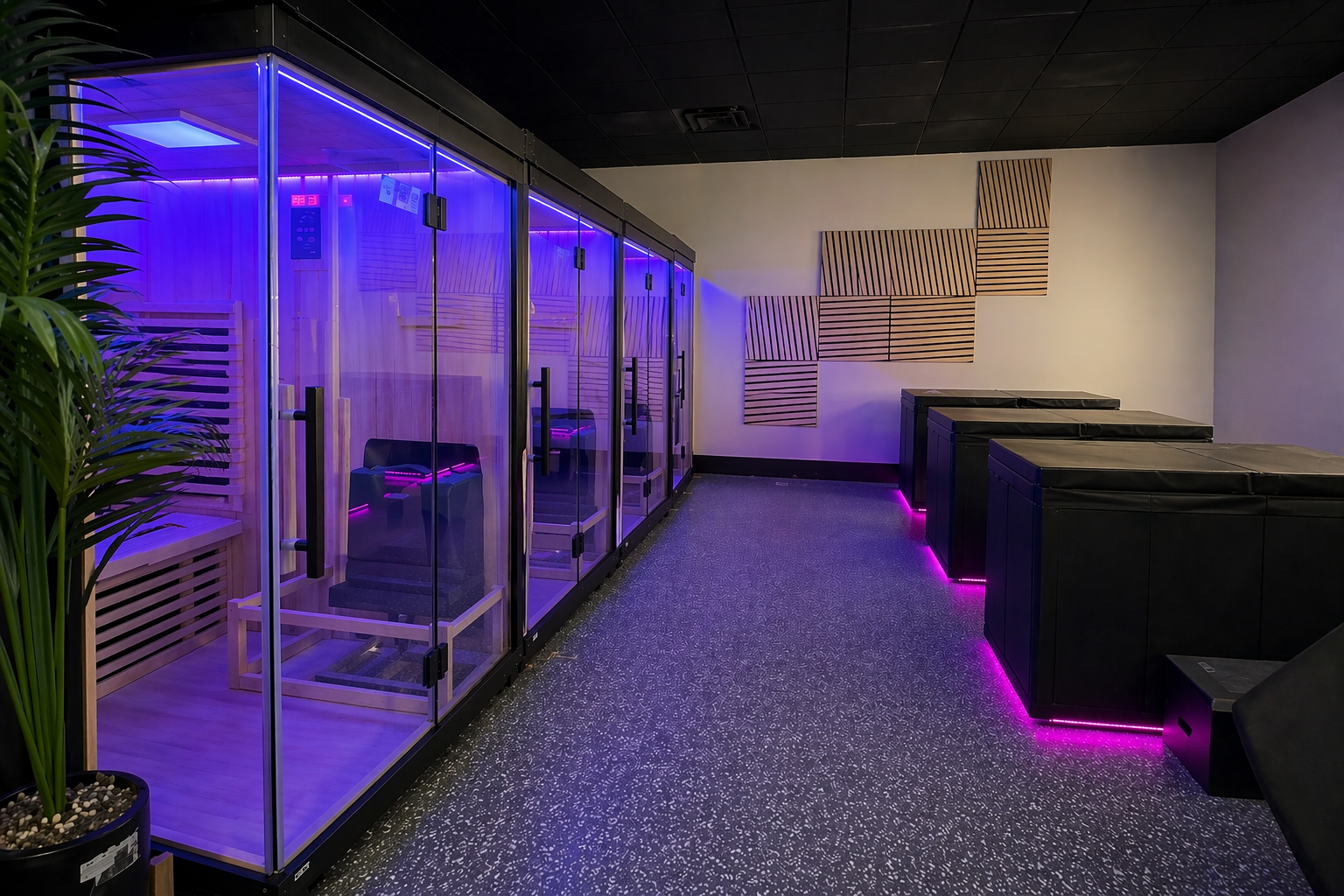
Recovery District is a recovery and wellness center in West Covina, California, offering contrast therapy, cold plunge, sauna, cryotherapy, red light therapy with PEMF, assisted stretching, sports massage, and compression therapy. Founder Nicole worked with the LIT Method team on her presale strategy and studio buildout, applying the four-step framework documented in this guide.
The result: 75 founding members signed in the first 30 days of opening.
At Recovery District's $99/month founding rate, that volume produced approximately $7,500 in recurring monthly membership revenue from day one — a $90,000 annual run rate from membership alone, before drop-in revenue, packs, or ancillary services.
The framework worked because Nicole executed all four steps in sequence: a clear landing page, a structured founding offer with grandfathered pricing, consistent organic social through the construction window, and an automated email follow-up sequence that converted waitlist signups into paid memberships. Recovery District is now operating as one of the leading recovery centers in the San Gabriel Valley.
The case study illustrates a broader pattern: operators who treat presale as a real launch phase — not as something to figure out after construction — consistently hit the 100-member mark on or before opening day. Operators who skip presale typically take 6 to 12 months to reach the same number.
A note on equipment and studio buildout
Equipment selection is the single biggest decision after location. Cold plunges and saunas in a commercial studio environment run 10 or more sessions per day, which is dramatically harder on the equipment than residential use. Operators who buy residential-grade equipment for a commercial studio typically face chiller failures, water quality issues, and warranty disputes within the first year.
LIT Method offers turnkey commercial buildouts including equipment, SOPs, and operational support — the same support Recovery District used during their West Covina launch. Operators researching the buildout phase can review case studies of partner studios at LIT Method's website. Other commercial-grade equipment options exist; the broader point is that equipment specified for residential use is the wrong fit for a recovery studio doing real volume.
What this guide is not saying
This framework is not a guarantee — it is a structure that has worked across multiple studio launches, including Recovery District. The execution still matters. A weak landing page, a thin founder story, or an inconsistent social presence will produce weak results regardless of the framework.
The framework also assumes you are opening a recovery studio in a market with at least some existing demand for recovery services. In markets where contrast therapy is not yet a recognized category, the education phase will take longer and the timeline will stretch.
This guide also focuses on customer acquisition, not on the operational decisions that determine whether your studio is profitable once it opens — equipment selection, lease negotiation, staffing, scheduling software, and SOPs are all separate topics with their own playbooks.
Methodology: This framework is drawn from observed launches of recovery studios offering contrast therapy, sauna, and cold plunge services, including Recovery District in West Covina, California. Specific results vary by market, operator execution, and category awareness in the local area. Last reviewed: May 2026.
Frequently asked questions
How much capital do I need to open a recovery center?
Most single-location recovery studios open with $50,000 to $150,000 in startup capital, depending on market, square footage, and equipment selection. The largest line items are equipment (cold plunges, saunas, chillers), buildout (electrical, plumbing, flooring), and lease deposits. Marketing during presale is a smaller line item — most operators spend $1,000 to $5,000 on paid social during presale to amplify organic content.
How long does the presale phase typically last?
60 to 120 days is the typical presale window, mapped to your construction timeline. Starting earlier than 120 days dilutes urgency; starting later than 60 days does not give the email automation flow enough time to convert captures into paid members.
Is it legal to sell memberships before the studio is open?
In most jurisdictions, yes — provided you clearly disclose that the studio is in pre-opening, give customers a clear expected open date, and offer a refund if the studio fails to open. Consult a local attorney before launching presale to confirm requirements in your state, particularly around membership contracts and consumer protection laws.
What conversion rate should I expect from email capture to paid membership?
Operators running a complete email automation flow typically see 8% to 15% of email captures convert to paid founding memberships. That means a goal of 100 founding memberships requires roughly 700 to 1,200 email captures during the presale window — achievable in 90 days with consistent organic social plus modest paid amplification.
Should I run paid ads during presale?
Paid ads work best as amplification of validated organic content, not as cold-traffic acquisition. The most efficient approach is to identify organic posts that performed well — high shares, saves, comments — and boost them to a 20-mile radius around the studio. Cold paid traffic with no organic validation typically delivers a higher cost per lead and lower conversion rate.
What happens to founding members when I raise prices after opening?
Founding members stay grandfathered at their original rate as long as they remain active. If a member cancels, they lose grandfathered pricing and would rejoin at the current full retail rate. This grandfathering policy is the single most powerful retention tool in the framework — most operators see founding member retention rates 2 to 3 times higher than retention rates for members who joined after opening.
Can this framework work for franchise locations?
Yes, with one adjustment: franchise operators usually inherit a brand identity and corporate marketing assets, which means the founder story step is replaced by a local-operator story. The other three steps — landing page, presale offer, email automation — work the same way for franchise launches as for independent studios.
How many founding members can I realistically sign in the first 30 days?
Operators executing the full framework — landing page, presale offer, organic social, and email automation — can sign 50 to 100 founding members in the first 30 days. Recovery District in West Covina signed 75 in their first 30 days using this framework, generating roughly $7,500 in monthly recurring revenue from founding memberships alone. Markets with weaker category awareness or smaller addressable populations will land at the lower end of that range.