
✓ Written by: Samantha Becker, Lead Writer & Content Strategist
✓ Expert Verified by: Justin Norris, Co-Founder of LIT Method
The Four Sauna Types, Quickly
- Infrared sauna: Light heats your body directly at 120°F–170°F. Gentler heat, favored for recovery and circulation.
- Traditional sauna: An electric stove heats the air to 180°F–230°F, dry or with steam. The classic, intense sweat.
- Hybrid sauna: Infrared and traditional heat in one cabin — the full temperature range (about 120°F–230°F) and both experiences in a single footprint.
- All-in-one sauna: A hybrid that also builds in red light therapy — all three modalities (infrared + traditional + red light) from one cabin. The rarest configuration.
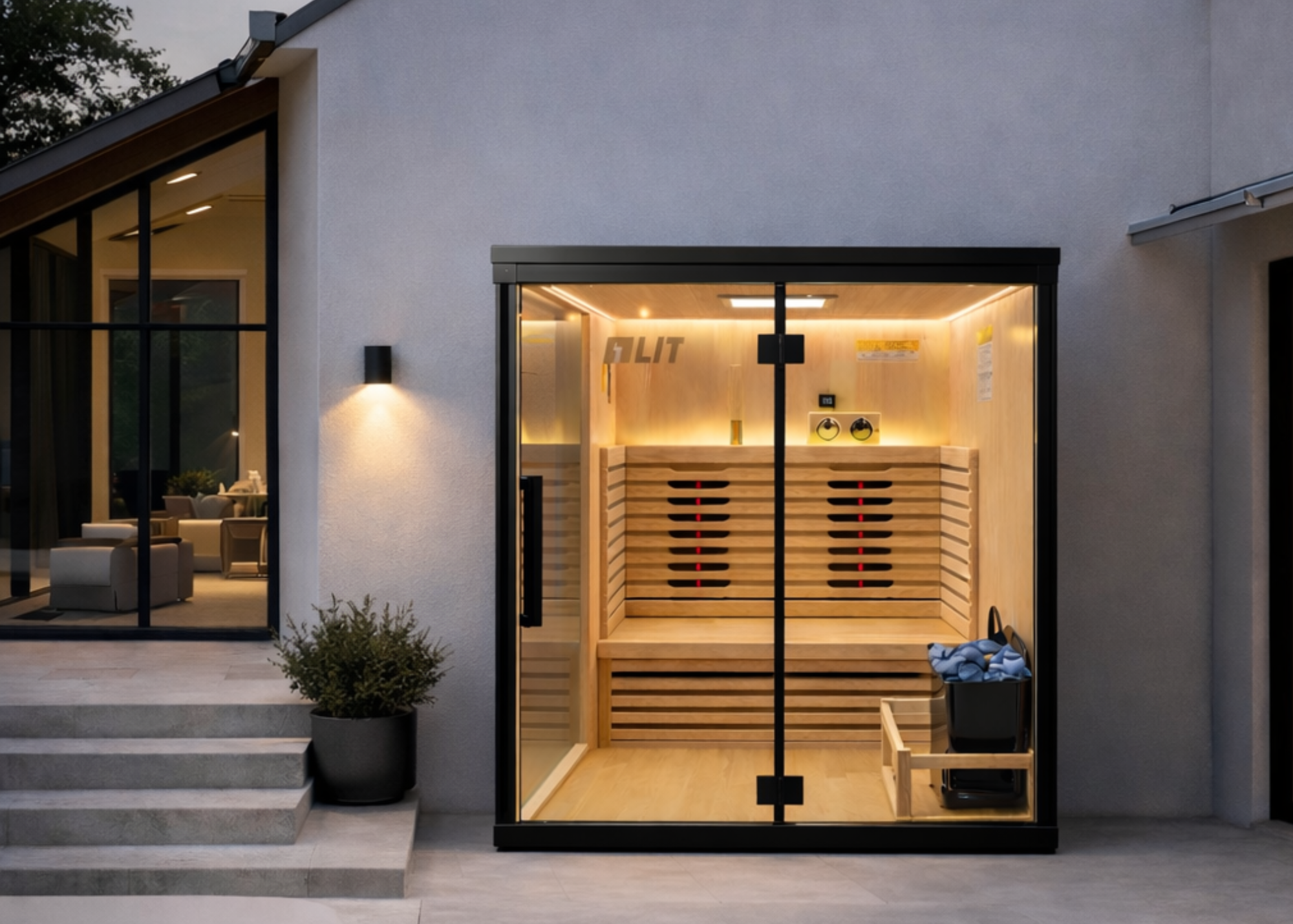
A hybrid sauna combines infrared and traditional heat so you don't have to choose between gentle recovery heat and an intense traditional sweat. An all-in-one adds integrated red light therapy on top. The LIT Method Titan is the world's only all-in-one hybrid (infrared + traditional + red light) with both indoor and outdoor capability.
What Is a Hybrid Sauna?
A hybrid sauna combines infrared therapy and traditional heat in a single cabin. You get the full-body benefits of full-spectrum infrared at lower temperatures, and you can also reach the higher heat of a traditional sauna — all without buying or housing two separate units. An all-in-one sauna goes a step further, integrating medical-grade red light therapy as a third built-in modality.
The four types compared:
| Type | Heat source | Temperature | Modalities | Best for |
|---|---|---|---|---|
| Infrared | Light/radiant panels | 120°F–170°F | Infrared | Gentle recovery, circulation, lower-heat sessions |
| Traditional | Electric stove (dry or steam) | 180°F–230°F | Traditional | Intense classic sweat, steam (löyly) |
| Hybrid | Infrared + stove | ~120°F–230°F | Infrared + traditional | Versatility, both experiences, one footprint |
| All-in-One | Infrared + stove + red light | ~120°F–230°F | Infrared + traditional + red light | Everything in one cabin |
Infrared Saunas: How They Work
Infrared saunas operate from about 120°F to 170°F, using light to heat your body directly rather than warming the surrounding air. Many people choose infrared because they can get a substantial sweat and an elevated heart rate at a much lower temperature than the 200°F-plus of traditional saunas.
Most infrared saunas use one of three wavelength types:
- Near-infrared (NIR), ~700–1400nm: Shorter wavelengths associated with cellular energy (ATP) production, studied for skin and surface tissue support.
- Mid-infrared (MIR): Associated with circulation and is often discussed in the context of comfort and recovery.
- Far-infrared (FIR), ~3,000nm and beyond: Deeper wavelengths that raise body temperature and heart rate, associated with a detox-style sweat and cardiovascular response.
- Full spectrum: Combines all three bands for a total-body session.
Why Far-Infrared Gets Attention: Heat Shock Proteins
One reason far-infrared heat is studied closely is its role in triggering heat shock proteins (HSPs). HSPs are widely described in the research as molecular "chaperones" — they help other proteins fold correctly, prevent harmful aggregation, and support cellular stability under stress. Heat exposure, including far-infrared sauna use, is one of the conditions associated with increased HSP production, which researchers connect to recovery and cellular resilience.
Far-infrared sessions are generally associated with:
- Increased cardiac output and skin blood flow
- Changes in cardiovascular hemodynamics, including reduced vascular resistance
- Raised muscle temperature, which research links to measures of force development and recovery
Why Choose Full-Spectrum Infrared
Because the benefits of far-infrared are included within a full-spectrum experience, full spectrum gives you the widest range. The LIT Method BeautyBox Full Spectrum Infrared + Red Light Sauna — Esquire's Best At-Home Sauna of 2026 — uses low-EMF near, mid, and far infrared panels for a 360° session, paired with red light.
Full-spectrum infrared is generally associated with:
- Deep sweating and increased circulation
- A calming effect on the nervous system and stress reduction
- Deeper tissue penetration tied to ATP production, skin renewal, and post-workout recovery
- Longer, more comfortable sessions without the intensity of traditional heat
Who tends to choose full-spectrum infrared: athletes focused on recovery; people managing joint or muscle discomfort who want a gentle, consistent tool; and anyone who prefers lower-heat sessions. Infrared sauna use is a wellness practice, not a medical treatment — if you have a health condition, talk to your doctor about whether and how to use one.
Traditional Saunas: How They Work
Traditional saunas use an electric stove to heat the air, reaching up to 230°F, with or without steam. Common sessions run 180°F–200°F, warming your body through the hot air for an intense, restorative sweat. Traditional sauna use has been studied for benefits including reduced inflammation, cardiovascular health, lung function, and mental wellbeing — Dr. Charles Raison of the University of Wisconsin-Madison told NPR that time-limited high heat functions as a meaningfully effective antidepressant.
Traditional Dry Saunas
Dry saunas offer the hottest, most intense heat therapy, designed to mimic a moderate cardiovascular effort. They're generally associated with post-workout muscle recovery, improved skin circulation, metabolism, sleep, and a detox-style sweat. They suit people who want an intense, rewarding post-workout session or the effects of cardiovascular effort in a passive format.
Traditional Steam Saunas (Löyly)
The steam experience — löyly — is gentler and more humid, typically at lower temperatures than dry heat. It's associated with opening airways, loosening congestion, deep relaxation, and reduced muscle soreness. It tends to suit people who enjoy a soothing, humid session or want to open pores before skincare. As with any heat therapy, those with respiratory or skin conditions should check with a clinician first.
Hybrid Saunas: The Best of Both
A hybrid sauna combines infrared and traditional heat in one cabin, so you can choose either system for a given session — or run a back-to-back routine that moves from gentle infrared recovery to a high-heat traditional sweat.
Why buyers choose hybrid:
- Smaller footprint — one cabin instead of separate units for each modality
- Versatility — different heat for different people, goals, or days
- Cost efficiency — one purchase covers both experiences
- Broadest temperature range — roughly 120°F–170°F infrared up to 180°F–230°F traditional
Who tends to choose hybrid: multi-person households with different heat preferences, buyers with limited indoor or outdoor space, and anyone who doesn't want to choose between recovery-style and intense-heat sessions.
All-in-One Saunas: The Rare Three-Modality Cabin
All-in-one saunas are among the most sought-after — and hardest to find — cabins on the market. While several brands offer red light as an add-on tower or accessory, it's rare to find a sauna with all three modalities (infrared, traditional, and red light) built into a single cabin from the original design. That combination is the "unicorn" of home recovery.
What sets an all-in-one apart:
- Every hybrid benefit, plus integrated medical-grade red light therapy associated with skin health, collagen stimulation, tissue support, and sleep
- A single cabin engineered from the start to run multiple modalities, two simultaneously
- Handcrafted, durable design built for the combined load
The LIT Method Titan is the world's only all-in-one hybrid infrared and traditional sauna with red light and indoor/outdoor capability — a configuration recently profiled by the New York Post as part of where home recovery is heading.
Which LIT Method Sauna Should You Choose?
Decision paralysis is normal — here's the cheat sheet by what you want most.
Best for portable far-infrared + red light: LIT Method InfraPod. Six near-zero-EMF PureTech carbon far-infrared panels plus dual medical-grade 660nm + 850nm red and near-infrared light therapy, in a portable cabin. Best for a far-infrared focus that still includes red light. (If you want far-infrared, note it's already included within full-spectrum heat — so consider whether full spectrum is the better long-term fit.)
Best full-spectrum infrared: LIT Method BeautyBox. Esquire's Best At-Home Sauna of 2026, with near, mid, and far infrared plus a dual-wavelength red light panel. The 660nm wavelength targets surface skin health (collagen, fine lines, tone); the 850nm near-infrared penetrates deeper for muscle recovery and cellular repair — both running simultaneously with your infrared session.
Best traditional: LIT Method Solis Red Light Traditional Sauna. Harvia 6kW or 8kW Finnish-engineered stove options; the largest reaches up to 200°F, with built-in red light therapy.
Best hybrid / all-in-one: LIT Method Titan. Infrared, traditional, and red light built into one cabin, with indoor/outdoor operability — 100% weatherproof and rated to operate as low as −30°F. Best if you want every option, or want one modality now with room to change later.
Frequently Asked Questions
What is a hybrid sauna?
A hybrid sauna combines infrared and traditional heat in a single cabin, letting you use gentle infrared heat (around 120°F–170°F) or an intense traditional sweat (up to 230°F) from one unit. It saves space and money versus buying two separate saunas. An all-in-one hybrid, like the LIT Method Titan, also integrates red light therapy as a third built-in modality.
What is the difference between an infrared and a traditional sauna?
An infrared sauna uses light to heat your body directly at lower temperatures (120°F–170°F), so you sweat at a gentler heat. A traditional sauna uses an electric stove to heat the air to 180°F–230°F, often with steam, for a hotter and more intense session. Infrared is favored for gentle recovery; traditional for the classic high-heat experience. A hybrid offers both.
What is an all-in-one sauna?
An all-in-one sauna is a hybrid cabin that builds in all three heat modalities — infrared, traditional, and red light therapy — from the original design, rather than offering red light as a separate add-on. It's the rarest sauna configuration. The LIT Method Titan is the only all-in-one hybrid with both indoor and outdoor capability.
Is a hybrid sauna better than infrared or traditional alone?
A hybrid is better for buyers who want versatility, since it covers the full temperature range and both heat styles in one footprint. A dedicated infrared or traditional sauna can cost less and may suit someone certain they only want one modality. If multiple people will use it, or your goals might change over time, a hybrid avoids having to choose.
What temperature does a hybrid sauna reach?
A hybrid sauna covers the combined range of both systems: roughly 120°F–170°F on the infrared setting and up to 180°F–230°F on the traditional setting. This is the widest temperature range of any sauna type, which is the main reason buyers choose hybrids.
Do hybrid saunas have red light therapy?
Only all-in-one hybrids have red light therapy built in. A standard hybrid combines infrared and traditional heat only. The LIT Method Titan is an all-in-one hybrid with integrated red light therapy, and the BeautyBox and InfraPod include red light alongside infrared.
Can a hybrid sauna be used indoors and outdoors?
Most saunas are designed for one or the other, but some are built for both. The LIT Method Titan is engineered for indoor and outdoor use — fully weatherproof against rain, sun, and snow, and rated to operate in temperatures as low as −30°F.
Still deciding? Compare full lineups in our related guides — Best Portable Saunas: A 2026 Buyer's Guide and How to Choose an Outdoor Sauna: The 8 Specs That Actually Matter — or book a complimentary consultation with a LIT expert to find your fit.