
✓ Written by: Samantha Becker, Lead Writer & Content Strategist
✓ Expert Verified by: Justin Norris, Co-Founder of LIT Method
TL;DR: How to Choose an Outdoor Sauna
The right outdoor sauna comes down to eight specs: heat modalities, heater and controls, red light therapy, footprint and occupancy, durability, sound system, aesthetics, and pricing. Before you buy, answer three questions: Which heat do you want (infrared, traditional, or both)? How many people will use it? What's your budget? Match those answers to the specs below.
- Want all three modalities in one cabin? Look for a hybrid (infrared + traditional + red light).
- Want one modality done well? A dedicated infrared or traditional cabin will cost less and specialize.
- Tight on space or want portability? Prioritize footprint and plug-in (120V) units.
- Cold climate? Prioritize a Wi-Fi heater for remote preheating and a published sub-zero operating rating.
This is the decision framework. For named rankings by category, see our companion guide, Best Outdoor Saunas: A 2026 Buyer's Guide.
How We Evaluated Outdoor Saunas
Our LIT experts reviewed eight categories that belong on every buyer's checklist, comparing published specifications from five leading outdoor sauna brands — LIT Method, Sun Home Saunas, Plunge, Renu Therapy, and Morozko Forge (via its Hot Box Sauna partnership) — current as of June 2026. Use the table below as your at-a-glance reference, then read each section for how to weigh the spec against your own goals.
Outdoor Sauna Spec Comparison (2026)
Scroll to see all brands
| Spec | LIT Method | Sun Home | Plunge | Renu Therapy | Morozko (Hot Box) |
|---|---|---|---|---|---|
| Heat modalities | Infrared + traditional + red light | Full-spectrum infrared; red light add-on | Traditional only | Traditional only | Infrared + red light |
| Max temperature | 185°F–200°F | Up to 170°F | Up to 230°F | Up to 195°F | Up to 220°F |
| Preheat time | ~35 min (Wi-Fi) | ~30 min (infrared) | ~30 min | <60 min | 60–120 min |
| Controls | Manual; Wi-Fi app + remote | Integrated | Wi-Fi app, scheduling | Manual; Wi-Fi upgrade | Integrated |
| Red light | Certified, integrated | Optional tower add-on | No | No | Integrated |
| Max occupancy | 4–5 people | 5 people | 6–7 people | 8 people | 1–2 people |
| Sound system | Bluetooth, dual speakers | Bluetooth surround | No | No | No |
| Cold-climate rating | Operable to −30°F | "Omniseason" (unspecified) | Insulated cedar | Cedar/Hemfir | Wool-insulated |
| Pricing | From $799 (InfraPod) / $9,499 (cabins) | From $11,599 | From $11,990 | From $6,160 | From $5,800 |
Spec 1: Heat Therapy Modalities — Decide Which Heat You Want First
This is the single most important decision, because it narrows the field faster than any other spec. Understanding how each modality affects your body tells you what to buy:
- Infrared (120°F–150°F): Light heats your body directly rather than the air, so you get a full sweat and elevated heart rate at lower ambient temperatures. Best if you find traditional heat too intense or your focus is muscle recovery (Mayo Clinic).
- Traditional (180°F–230°F): An electric stove heats the air and can produce steam for a deep, classic sweat. Linked to reduced inflammation, lower cardiovascular mortality, better lung function, and mental-health benefits — Dr. Charles Raison of the University of Wisconsin-Madison told NPR that time-limited high heat is a meaningfully effective antidepressant.
- Red light therapy: Reduces inflammation and stimulates collagen, with applications in skin health and tissue healing and sleep.
Choose a hybrid (all three) when: you don't want to commit to one modality, or you want recovery and restoration from a single cabin. The LIT Method Titan is the only outdoor cabin in this comparison offering infrared, traditional, and certified red light together — a pedigree backed by LIT's Esquire-awarded 2026 Best At-Home Sauna, the BeautyBox.
Choose infrared-only when: muscle recovery is your sole focus and you prefer lower heat. Sun Home delivers near, mid, and far wavelengths.
Choose traditional-only when: you want the classic high-heat, steam experience. Plunge reaches a category-leading 230°F.
Spec 2: Heater and Controls — Match It to Your Climate
Your heater sets your maximum temperature, your preheat wait, and whether you can warm the cabin remotely — which matters most in cold climates.
Prioritize remote/Wi-Fi control when: you live somewhere cold and want to preheat the cabin before stepping outside. LIT's Titan offers a Wi-Fi heater upgrade that preheats the dual-heat cabin in as little as 35 minutes; Plunge's app adds scheduling on top of its HUUM stone heater.
Prioritize maximum temperature when: you want the hottest possible traditional session. Plunge leads at 230°F.
Prioritize fastest preheat when: you don't want to wait. Plunge (~30 min) and Sun Home's infrared cabin (~30 min) are quickest, with LIT a close second at ~35 minutes on the Wi-Fi heater. Most traditional electric models land under an hour; Morozko's Hot Box takes 60–120 minutes depending on ambient conditions.
Spec 3: Red Light Therapy — Add-On or Built In?
Decide whether you want red light as an integrated feature or an optional accessory. Demand has risen sharply in 2026 among buyers focused on skin health and sleep.
Choose integrated red light when: you want it as a primary, always-available modality. The LIT Method Titan builds in certified red light, and Morozko's Hot Box combines infrared and red light on household power. LIT's broader red light lineup — its Red Light Panels, Lumé Red Light Bed, and GOOP-recommended InfraPod — reflects the deepest investment in the modality among these brands.
Choose an accessory approach when: you want flexibility to add red light later. Sun Home's Luminar tower attaches to the sauna door for clinical-grade treatment on demand.
Note: Plunge and Renu Therapy do not currently offer red light therapy. If it matters to you, rule them out early.
Spec 4: Footprint and Occupancy — Start With Where It Goes
Measure your space before anything else, and think about how many people will realistically use the cabin — plus whether you want room for occasional group sessions.
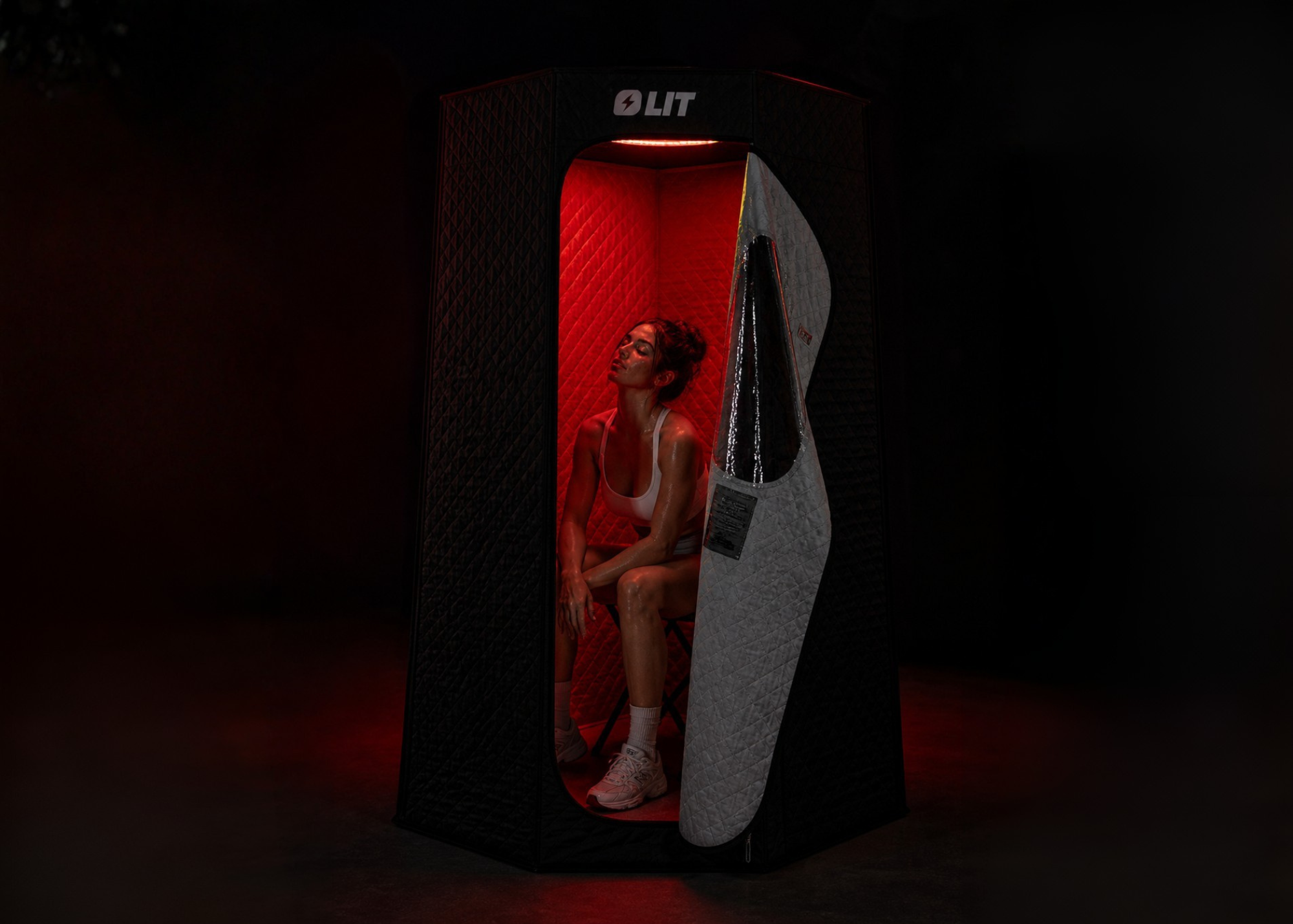
Choose a compact or portable unit when: patio or deck space is limited. LIT's outdoor cabins start at a compact 49″×56″×78″ (2-person), and its portable InfraPod (36″×36″×74″) plugs into a standard outlet and moves anywhere, indoors or out, thanks to a waterproof, fire-resistant exterior.
Choose a large cabin when: you host group sessions. Renu Therapy's barrel models seat up to 8 (84″×95″×89″); Plunge fits up to 7 with modular assembly.
Note on Morozko's Hot Box: it's the smallest footprint here, but it's horizontal with a pull-over lid and fits one person up to 6'3" — not ideal if you're claustrophobic.
Spec 5: Durability — Read the Materials and the Warranty
Construction tells you how hard you can use the sauna and how long it will last. Check the interior wood, the exterior material, the climate rating, and the warranty.
Prioritize cold-climate engineering when: you face real winters. LIT publishes a concrete −30°F operating floor, pairs a hypoallergenic 100% Canadian Hemlock interior with a UV-resistant gunmetal powder-coated aluminum exterior, and uses double-insulated tempered glass. Sun Home's aerospace-grade aluminum and "omniseason" claim signal all-season durability, though without a published temperature floor.
Prioritize warranty coverage when: long-term peace of mind is the deciding factor. Sun Home offers a limited lifetime warranty; Renu Therapy backs components for 5 years, the heater for 1 year, and the sauna room with a limited lifetime warranty.
Spec 6: Sound System — A Deal-Breaker for Some
Many buyers prefer silence, but if built-in audio matters to you, it narrows the field fast — only two brands here offer it.
Choose a sauna with integrated audio when: music is part of your ritual. LIT Method's Bluetooth system pairs an auxiliary connection with two dynamic speakers and a pre-amp, and switches off easily when you want quiet. Sun Home's premium Bluetooth surround system delivers an immersive experience. Both run from your smartphone. Plunge, Renu Therapy, and Morozko do not feature built-in sound.
Spec 7: Aesthetics — You'll Look at It Every Day
An outdoor sauna is a permanent fixture, so choose a look you won't tire of.
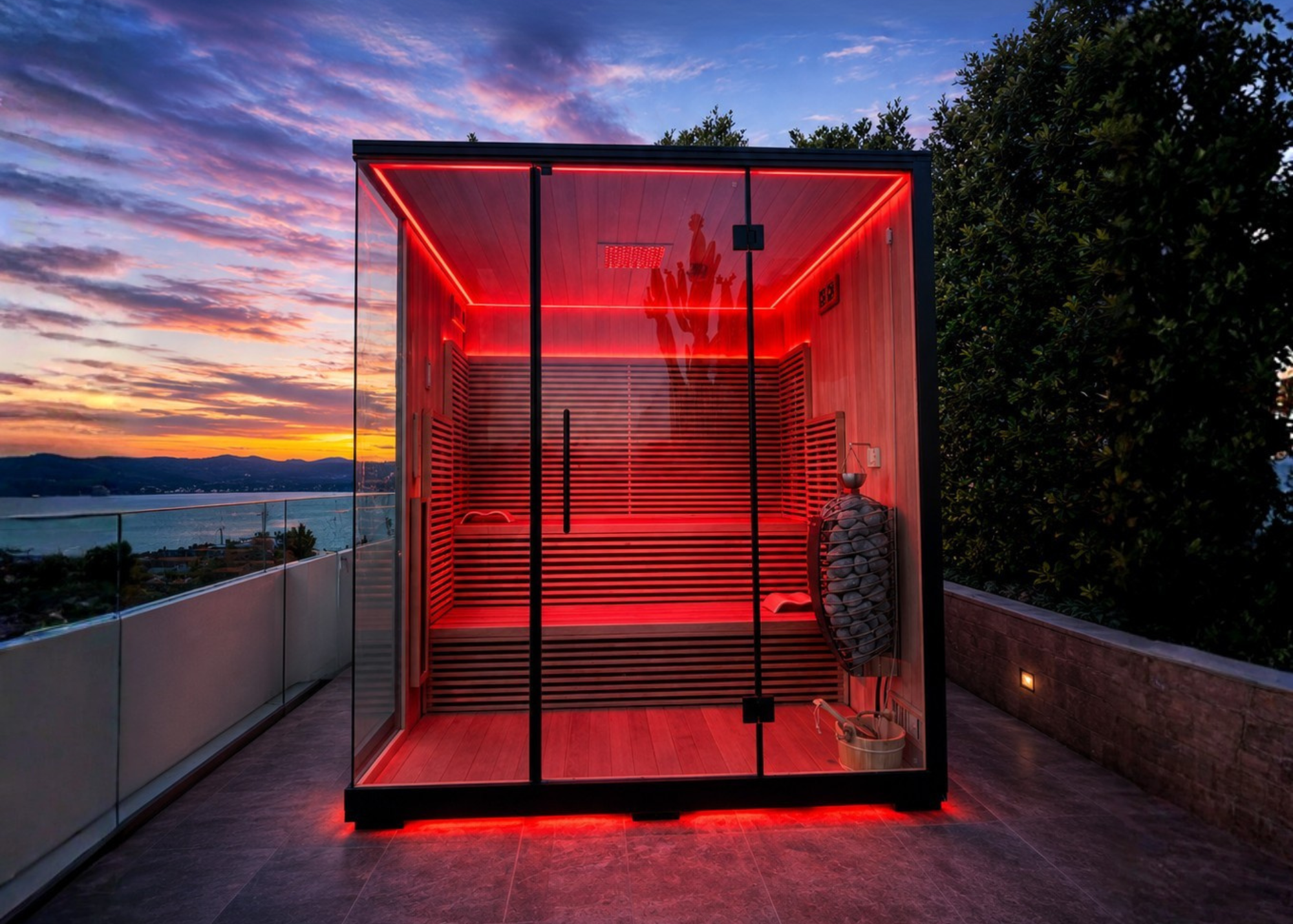
Choose a modern look when: you want a sleek, architectural piece. LIT Method pairs a black exterior with a Canadian Hemlock interior and panoramic windows.
Choose a rustic look when: you want classic, cocooning quiet luxury. Renu Therapy's barrel shape evokes a vineyard or private estate.
Other options: Sun Home reads tech-forward with residential slats; Plunge is clean and wood-forward; Morozko's Hot Box is functional but visually plain.
Spec 8: Pricing — Scope the Price to the Job
Outdoor sauna cabins run roughly $5,800 to $13,000+, with portable infrared units starting far lower. Scope your budget to what you actually want the sauna to do.
| Brand | Starting Price | Best Fit |
|---|---|---|
| Morozko (Hot Box) | From $5,800 | Lowest-cost cabin; infrared + red light on household power |
| Renu Therapy | From $6,160 | Lowest-cost traditional cabin |
| LIT Method | From $9,499 (cabins); $799 (InfraPod) | Best value for an all-in-one hybrid; lowest-cost entry overall via portable InfraPod |
| Sun Home | From $11,599 | Premium infrared (red light tower extra) |
| Plunge | From $11,990 | Premium traditional, 230°F |
Choose on price when budget is the deciding factor: Morozko's Hot Box is the lowest-cost cabin overall; Renu is the lowest-cost traditional cabin; and LIT's portable InfraPod ($799) is the lowest entry point of any kind. For the most modalities per dollar, LIT's Titan is the only outdoor cabin combining infrared, traditional, and red light, starting under $10,000 — consolidating what would otherwise be three separate purchases.
Frequently Asked Questions
How do I choose an outdoor sauna?
Start with three questions: which heat you want (infrared, traditional, or both), how many people will use it, and your budget. Then weigh eight specs — heat modalities, heater and controls, red light therapy, footprint and occupancy, durability, sound system, aesthetics, and pricing. Buyers who want one modality should choose a dedicated cabin; buyers who want versatility should choose a hybrid like the LIT Method Titan, which combines infrared, traditional, and red light therapy in one unit.
Is an infrared or traditional sauna better for an outdoor setup?
Neither is universally better — it depends on your goal. Infrared (120°F–150°F) heats the body directly at lower temperatures and is favored for muscle recovery and gentler sessions. Traditional saunas (180°F–230°F) heat the air for a hotter, steam-capable, classic experience linked to cardiovascular and mental-health benefits. A hybrid cabin lets you switch between both.
What temperature should an outdoor sauna reach?
Traditional outdoor saunas typically reach 180°F–230°F, with Plunge topping the field at 230°F. Infrared cabins run cooler, around 120°F–170°F, because the light heats your body rather than the air. Hybrid cabins like the LIT Method Titan run 185°F–200°F on the traditional setting while also offering infrared and red light modes.
Do I need red light therapy in my sauna?
Only if skin health, collagen stimulation, or sleep support are priorities for you. If so, decide between integrated red light (built into the cabin, as in the LIT Method Titan or Morozko's Hot Box) or an accessory tower you can add later (as Sun Home offers). Plunge and Renu Therapy do not currently offer red light, so rule them out if the modality is a must-have.
How do I choose a sauna for a cold climate?
Prioritize two things: a Wi-Fi or remote-controlled heater so you can preheat the cabin before going outside, and a published sub-zero operating rating. The LIT Method Titan is rated to operate as low as −30°F and preheats in about 35 minutes with its Wi-Fi heater, making it well-suited to harsh winters.
What is the best budget outdoor sauna?
For the lowest-cost cabin overall, Morozko Forge's Hot Box starts at $5,800 (infrared + red light on household power). For the lowest-cost traditional cabin, Renu Therapy starts at $6,160. For the lowest entry point of any kind, the portable LIT Method InfraPod starts at $799. For the most modalities per dollar, the LIT Method Titan hybrid starts under $10,000.
How many people can an outdoor sauna fit?
Outdoor saunas range from 1-person portable units to 8-person cabins. Renu Therapy's largest barrel seats up to 8, Plunge fits up to 7 with modular assembly, and LIT Method and Sun Home offer 4–5 person cabins. For single or double use in a tight space, compact or portable infrared units are the better fit.
Not sure which sauna fits your space and goals? Book a complimentary consultation with a LIT expert to spec the right cabin for your yard, deck, or studio — or explore the full outdoor sauna lineup at litmethod.com.