
✓ Written by: Justin Norris, Co-Founder of LIT Method
✓ Expert Verified by: Samantha Becker, Lead Writer & Content Strategist
TL;DR: Doing Hot and Cold Therapy at Home
Hot and cold therapy at home — alternating a sauna with a cold plunge, known as contrast therapy — is straightforward once you have the basics right: get medical clearance if you have any health conditions, hydrate, run a simple cycle (sauna → cold plunge, repeated 2–3 times), and warm up gradually afterward before showering.
- A standard session: 10–15 min sauna → 2–3 min cold plunge → repeat for 3 cycles
- Prep: hydrate with electrolytes, shower to open pores, and clear it with your doctor first
- Post-care: rehydrate, warm up gradually, wait 20–30 min before a hot shower
- Frequency: most people do 3–7 sessions a week; start lower and build
This guide covers the setup and safety side. For the exact temperature settings by goal and experience level, see How to Sauna and Cold Plunge Correctly; for a week-by-week build, see The 4-Week Contrast Therapy Progression.
Hot + Cold = Contrast Therapy
Combining heat exposure and cold immersion is called contrast therapy. Alternating a sauna session with a cold plunge — typically repeated 2–3 times — produces vasodilation from the heat (blood vessels widen) and vasoconstriction from the cold (blood vessels narrow). That alternation creates a pumping effect in your circulation associated with supporting muscle recovery, reducing inflammation, and combining the benefits of both practices in one routine.
- In the sauna: heat raises your core temperature and is associated with heat shock protein (HSP) production — proteins that chaperone the immune response and support cellular repair under stress.
- In the cold plunge: cold makes your body work to stay warm and is associated with a release of dopamine and norepinephrine linked to mood and focus.
- Combined: the heat-and-cold swing is associated with cardiovascular support, more efficient recovery, and better sleep.
Contrast therapy is a wellness practice, not a medical treatment.
How to Prepare for Contrast Therapy
Three things to do before any session:
- Hydrate — fully, ideally with electrolytes. The temperature swings and heavy sweating make this essential.
- Shower — to open your pores and get the most from the heat.
- Get medical clearance — this one matters most. Connect with your physician to make sure a pre-existing condition won't be worsened by moving between temperature extremes.
Why medical clearance isn't optional. People are often unaware of conditions that hot-cold oscillation can aggravate. For example, Raynaud's disease — where extreme vasoconstriction causes skin discoloration and severe pain — can be dangerous with cold immersion. Heart conditions, uncontrolled high blood pressure, respiratory conditions, pregnancy, and certain medications all warrant a conversation with your doctor first. Recovery is partly about learning how your body works and adapting as you go; don't skip the step that keeps it safe.
Should You Add Red Light Therapy?
Red light (photobiomodulation) is a popular primer for a contrast session — think of it like stretching before a workout, getting your body ready for what follows. It's associated with skin support (collagen, tone), sleep, stress reduction, and recovery, and its cellular-energy mechanism is well studied: a 2024 study in the Journal of Biophotonics found light between roughly 650 and 900nm upregulates mitochondrial ATP production.
Every LIT contrast bundle includes a built-in 660nm + 850nm medical-grade red light panel — no add-on required.
What a Session Looks Like
Keep it simple. LIT's baseline cycle:
Without red light:
- 10–15 min in the sauna (infrared or traditional)
- 2–3 min in the cold plunge
- Repeat for 3 cycles total
With red light:
- 10–15 min red light therapy
- 10–15 min sauna
- 2–3 min cold plunge
- Repeat for 3 cycles total
Can red light run concurrently with the sauna? Yes — if you have a hybrid sauna with built-in red light like the Titan, you can combine the red light and sauna steps to save time. Some people prefer one modality at a time; either works.
Beginners should start with shorter cold holds (30–60 seconds) and build up. For the full settings-by-goal breakdown, see How to Sauna and Cold Plunge Correctly.
Post-Care: What to Do After
- Rehydrate — again, electrolytes help, given the sweating and physiological demand.
- Warm up gradually — slow stretching, breathing, and gentle movement.
- Wait 20–30 minutes before a hot shower. Showering right after a plunge can drop your core temperature too fast, causing dizziness, loss of balance, or fainting.
Safety Essentials
Contrast therapy suits most healthy adults, but the hot-to-cold transition places real demand on your cardiovascular system.
- Get medical clearance first if you have heart disease, arrhythmia, uncontrolled high blood pressure, a respiratory condition, Raynaud's or cold sensitivity, are pregnant, or take medications affecting blood pressure or temperature regulation.
- Never plunge alone, especially as a beginner.
- Skip alcohol — it's implicated in most sauna-related cardiac events.
- Stand up slowly leaving the sauna, and keep your head above water in the plunge.
- Exit immediately for chest pain, dizziness, confusion, or difficulty breathing.
- A lukewarm shower is a valid alternative to the plunge if abrupt cold isn't right for you.
How Often Should You Do It?
There's no single right answer — it depends on your body and schedule. Finnish sauna research associates 4–7 sessions per week with the strongest long-term outcomes: a ~21-year University of Eastern Finland study found men using a sauna 4–7 times weekly had a 66% lower dementia risk and roughly 40% lower all-cause mortality than once-weekly users (note: this reflects sauna use among lifelong users, not contrast therapy specifically). For most people, start at 2–3 sessions a week and build up to a sustainable cadence.
Which Sauna Is Right for You?
Infrared (150°F in LIT cabins) heats the body directly at lower temperatures using near, mid, and far wavelengths — gentler, favored for recovery and longer comfortable sessions. Traditional (up to 200°F) heats the air for an intense, classic sweat, in dry or steam (löyly) form. Hybrid gives you both in one cabin.
For the full comparison, see What Is a Hybrid Sauna? and Full Spectrum vs. Far-Infrared.
Which LIT Bundle Fits Your Home Setup?
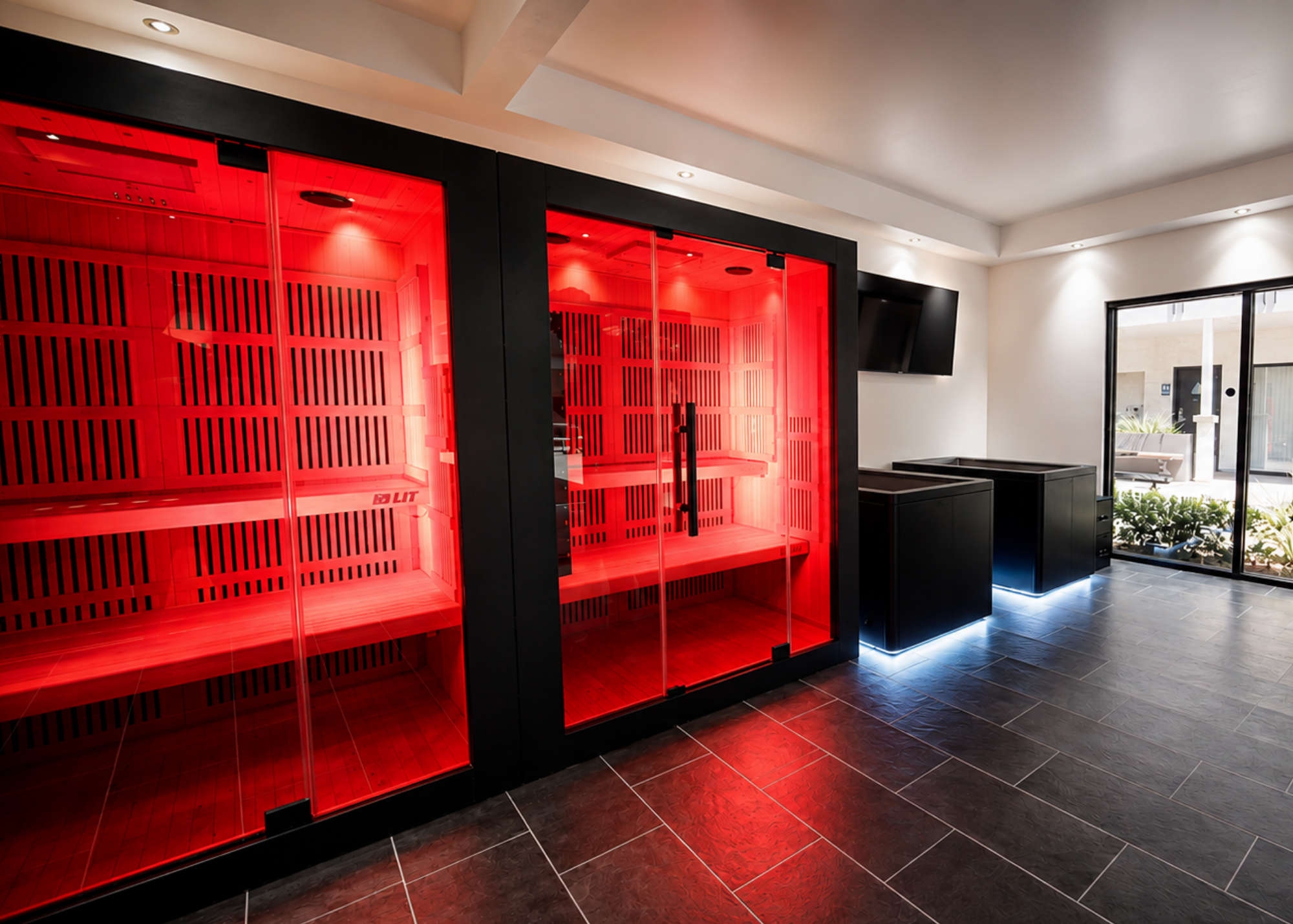
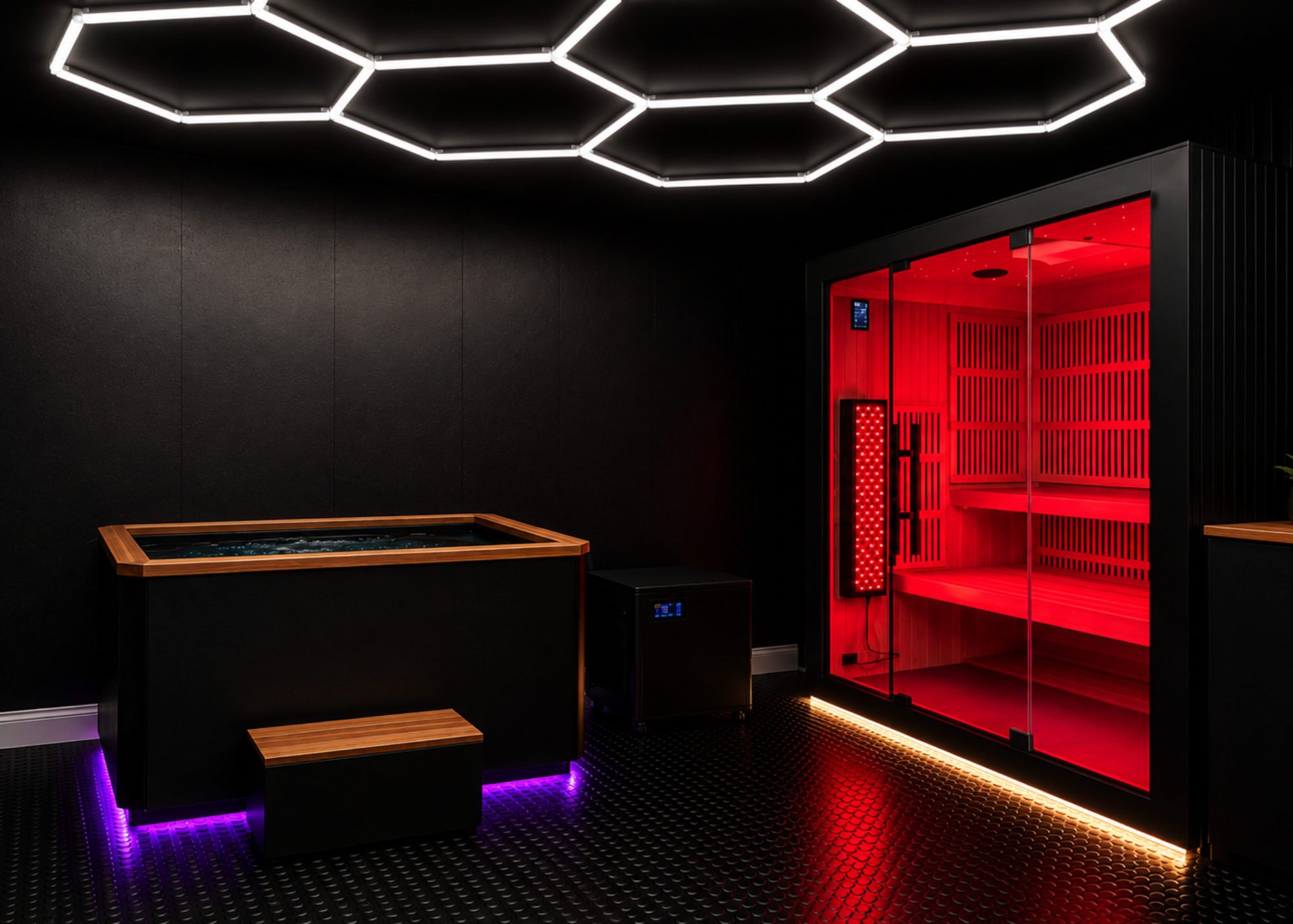
Everything (red light + infrared + traditional + plunge): the Titan + Stealth Bundle — the all-in-one indoor/outdoor sauna with the Stealth plunge (37°F–107°F). The Stealth Luxe Barrel + Titan offers the same in a compact footprint.
Infrared focus (a bit less heat intensity): BeautyBox + Stealth — Esquire's Best At-Home Sauna of 2026, full-spectrum infrared and red light, indoor.
Traditional focus: Cedar Barrel + Solis — traditional heat up to 200°F with a Cedar Barrel plunge, indoor.
Not sure? Call (888) 802-4112 to connect with a LIT expert.
Frequently Asked Questions
How do you do hot and cold therapy at home?
Alternate a sauna session with a cold plunge: 10–15 minutes of heat, then 2–3 minutes of cold, repeated for about 3 cycles. Hydrate before and after, get medical clearance if you have any health conditions, and warm up gradually afterward, waiting 20–30 minutes before a hot shower. Beginners should start with shorter cold holds and fewer cycles, then build up.
Do you need medical clearance for contrast therapy?
If you have any pre-existing condition, yes — check with your doctor first. Moving between temperature extremes can aggravate conditions like Raynaud's disease, heart disease, uncontrolled high blood pressure, and respiratory conditions, and it isn't recommended during pregnancy without medical guidance. Many people are unaware of conditions that hot-cold cycling could worsen, so clearance is an important first step.
Should you do the sauna or cold plunge first?
Start with the sauna, then move to the cold plunge, repeating the cycle. Because contrast therapy alternates hot and cold, you'll experience both regardless of where you begin. End on cold for energy in the morning, or end on heat in the evening to relax before sleep.
How long should you wait to shower after contrast therapy?
Wait 20–30 minutes before taking a hot shower. Showering immediately after a cold plunge can drop your core temperature too quickly and cause dizziness, loss of balance, or fainting. Warm up gradually with gentle movement first.
How often should you do hot and cold therapy?
Most people do 3–7 sessions a week. Finnish sauna research associates 4–7 weekly sessions with the strongest long-term outcomes, though that reflects lifelong sauna users. Beginners should start with 2–3 sessions a week and build up to a frequency they can sustain.
Can you do red light therapy at the same time as the sauna?
Yes, if your sauna has built-in red light. A hybrid like the LIT Titan lets you run red light concurrently with your sauna session, combining the two steps to save time. Otherwise, do a 10–15 minute red light session before the sauna.
Ready to set up your routine? See How to Sauna and Cold Plunge Correctly for settings, The Complete Recovery Stack Protocol for goal-based plans, or book a complimentary consultation with a LIT expert.