
✓ Written by: Samantha Becker, Lead Writer & Content Strategist
✓ Expert Verified by: Justin Norris, Co-Founder of LIT Method
TL;DR: Full Spectrum vs. Far-Infrared
Far-infrared (FIR) uses the longest infrared wavelengths to penetrate deep and raise body temperature — the most common infrared sauna type worldwide. Full-spectrum infrared combines near, mid, and far wavelengths, so it includes everything far-infrared does plus more.
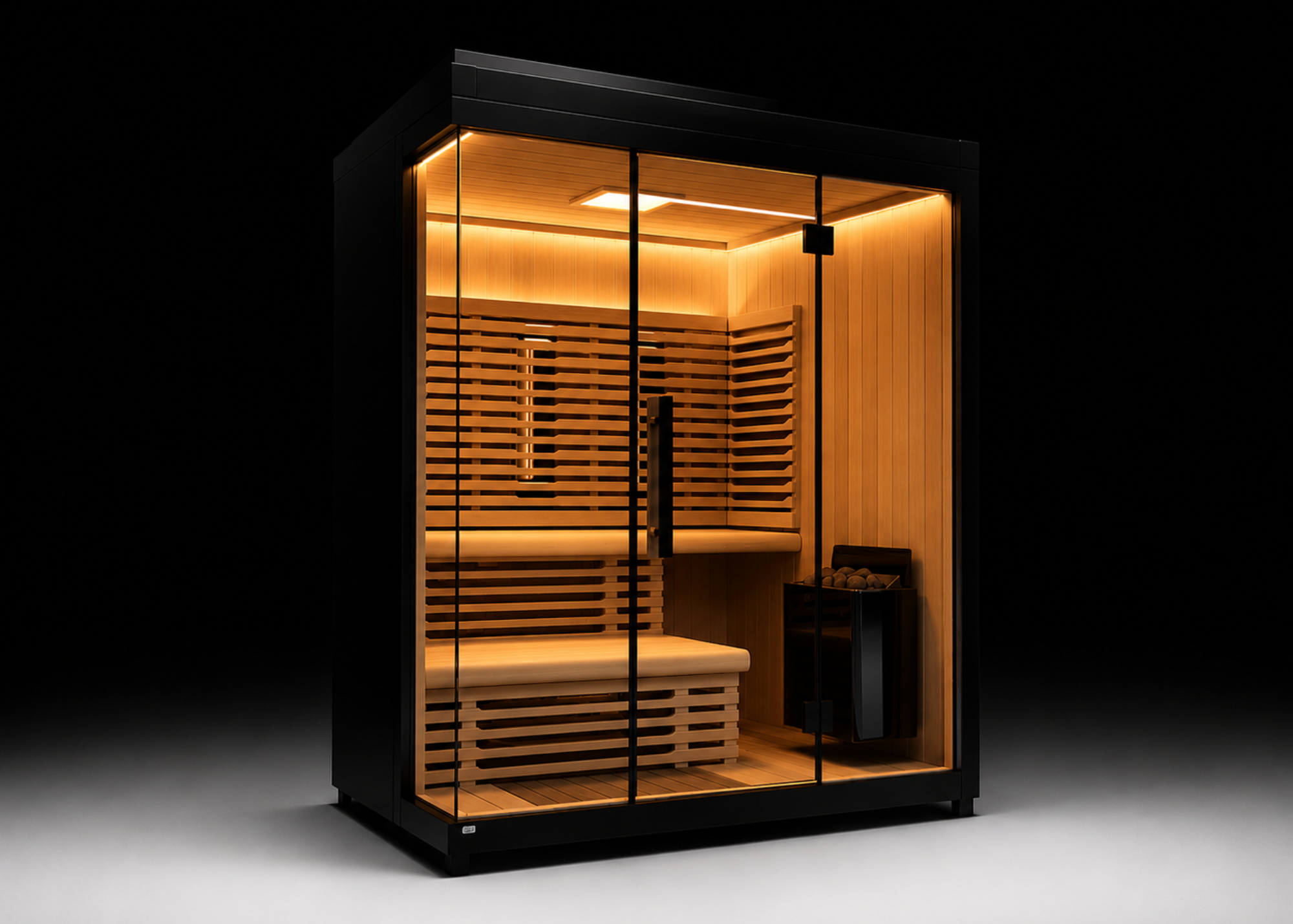
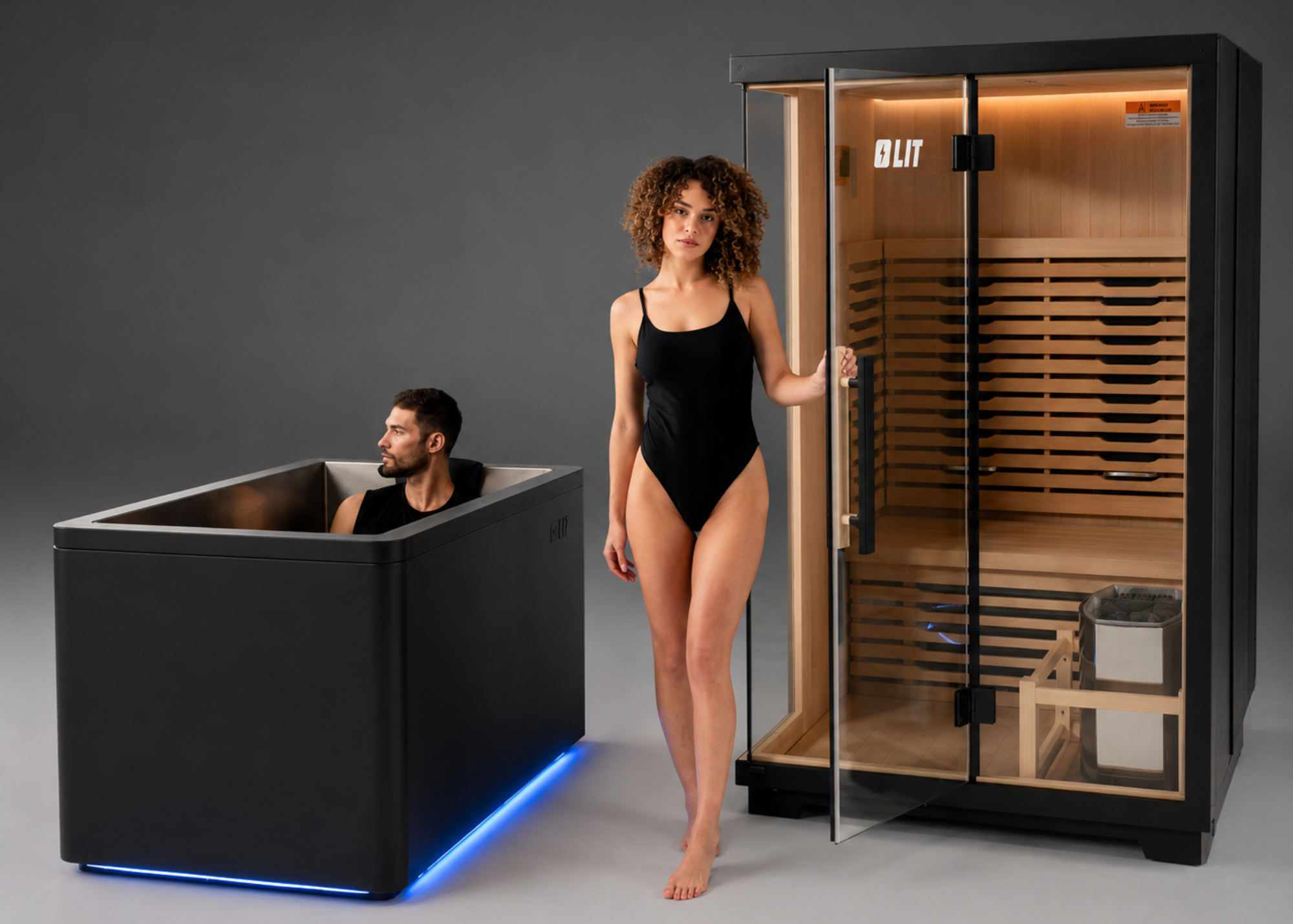
The short version: because full spectrum contains the far-infrared range, choosing full spectrum means you don't give anything up. That's why LIT's hybrid Titan uses full-spectrum infrared alongside traditional heat and built-in red light — one cabin covering the whole range.
| Far-Infrared (FIR) | Full-Spectrum Infrared | |
|---|---|---|
| Wavelengths | Far only (~3,000nm+) | Near + mid + far combined |
| Depth | Deep tissue penetration | Full range, surface to deep |
| Associated with | Detox-style sweat, cardiovascular response, deep-tissue warming | All FIR benefits plus skin/cellular support (NIR) and circulation (MIR) |
| Best for | Buyers focused specifically on deep heat | Buyers who want the widest range in one cabin |
What Is a Hybrid Sauna?
A hybrid sauna is a dual-heat cabin offering both infrared (far or full spectrum) and traditional (dry or steam) heat in a single footprint. Infrared runs cooler than traditional heat, so you get a substantial sweat and elevated heart rate at lower temperatures — and in a hybrid, you don't have to choose between the two. For the full primer, see What Is a Hybrid Sauna? Infrared vs. Traditional vs. Hybrid vs. All-in-One.
This guide focuses on the choice within the infrared side: far-infrared versus full spectrum.
The Infrared Wavelengths, Explained
Infrared heat therapy runs roughly 120°F–170°F. Most infrared saunas use one of these:
- Near-infrared (NIR), ~700–1400nm: Shorter wavelengths associated with ATP (cellular energy) production, studied for skin restoration and tissue repair.
- Mid-infrared (MIR), ~1400–3000nm: Mid-range wavelengths associated with circulation and oxygen delivery, often discussed for injury and pain support.
- Far-infrared (FIR), ~3,000nm and beyond: The deepest-penetrating wavelengths, associated with raising body temperature and heart rate for a detox-style sweat and cardiovascular response.
- Full spectrum: Combines all three bands for total-body coverage.
Why LIT Uses Full-Spectrum Infrared in Its Hybrid Sauna
Far-infrared penetrates deep into tissue, which is why people focused on deep-heat warming and a detox-style sweat are often drawn to it. But full-spectrum infrared includes the far-infrared range — plus the near and mid bands — so it covers everything FIR does and adds cellular and circulatory support on top.
That's the logic behind the Titan: reaching up to 150°F with low-EMF near, mid, and far infrared panels for a 360° session, it promotes deep sweating and increased circulation for total-body renewal. Just as the Titan means you don't choose between infrared and traditional heat, full spectrum means you don't limit yourself within the infrared modality either.
The practical takeaway: if you have the space and budget for full spectrum, there's little reason to choose far-infrared alone — you'd be opting into a subset of what full spectrum already delivers.
Alternating Full-Spectrum Infrared With Traditional Heat
A hybrid runs one modality at a time, which LIT co-founder Justin Norris frames as an opportunity to become "longevity literate" — learning to alternate intentionally.
Traditional dry heat (up to 200°F in the Titan) heats the air for the most intense sweat, associated with detoxification, post-workout muscle recovery, skin circulation, metabolism, and sleep. Traditional steam heat (löyly) — water over hot stones — is gentler and humid, associated with opening the airways, easing congestion, relaxation, and reduced muscle soreness.
Because both live in one cabin, you can build a rotating routine. A common pattern among LIT users: traditional heat on one day for an intense, detox-style sweat, then full-spectrum infrared the next so the panels penetrate deeper for muscle recovery and inflammation. This alternation is especially valuable for athletes who love the traditional sweat but rely on infrared for accelerated recovery on strength-training days.
Benefit Comparison: Far-Infrared vs. Full Spectrum
Far-Infrared
Far-infrared's most-discussed mechanism is heat shock proteins (HSPs). Widely described in the research as molecular "chaperones," HSPs help other proteins fold correctly and prevent harmful aggregation, supporting cellular stability under stress. Heat exposure, including far-infrared, is one of the conditions associated with increased HSP production, which researchers link to recovery and cellular resilience.
Far-infrared use is generally associated with:
- Improved cardiovascular hemodynamics, including reduced vascular resistance
- Increased muscle temperature, which research links to measures of force development and recovery
- Support for circulation and a detox-style sweat
Full-Spectrum Infrared
Full spectrum, as used in the Titan, is generally associated with:
- Deep sweating and increased circulation for clearer skin and total-body renewal
- A calming, stress-reducing effect on the nervous system
- Deeper tissue penetration tied to ATP production, skin renewal, and post-workout recovery
- Longer, more comfortable sessions without traditional heat's intensity
- Muscle recovery support after training
Because full spectrum includes the far-infrared band, its users get FIR's deep-heat benefits and the near/mid-infrared additions.
Infrared sauna use is a wellness practice, not a medical treatment. If you have a health condition, talk to your doctor about whether and how to use one.
The Verdict: Far or Full?
There's little decision fatigue here, because the two aren't really equals — full spectrum contains far-infrared. Far-infrared remains the most common infrared sauna experience worldwide, but if you can have the full range in one cabin, full spectrum tells the more complete story.
That's the approach behind the Titan: full-spectrum infrared, traditional heat, and built-in red light therapy (a fixed 660nm + 850nm medical-grade panel — 660nm for skin and collagen, 850nm for deeper recovery) in a single indoor/outdoor cabin. LIT's design-forward approach to recovery was recently profiled in the New York Post.
LIT experts' final say: full spectrum tells the full story of how to optimize a hybrid sauna.
Frequently Asked Questions
What is the difference between full-spectrum and far-infrared saunas?
Far-infrared saunas use only the longest infrared wavelengths (around 3,000nm and up), which penetrate deep to raise body temperature. Full-spectrum saunas combine near, mid, and far infrared, so they include the entire far-infrared range plus shorter wavelengths associated with skin and cellular support and circulation. Full spectrum covers everything far-infrared does and more.
Is full-spectrum infrared better than far-infrared?
Full spectrum offers a wider range because it includes far-infrared plus near and mid wavelengths. Far-infrared alone is a subset of full spectrum. If your focus is purely deep-heat warming, far-infrared delivers it; if you want the broadest set of benefits in one cabin, full spectrum is the more complete option — which is why LIT uses it in the Titan.
What is a hybrid sauna?
A hybrid sauna combines infrared and traditional heat in a single cabin, letting you choose gentle infrared (120°F–170°F) or intense traditional heat (up to 200°F) from one unit. LIT's Titan is a hybrid that uses full-spectrum infrared and adds built-in red light therapy, running one modality at a time.
Can you use infrared and traditional heat at the same time?
No — a hybrid sauna runs one heat modality at a time. The advantage is convenience and versatility: you can alternate between full-spectrum infrared and traditional heat across sessions or days to match different recovery goals, all in one cabin.
What wavelengths does full-spectrum infrared use?
Full-spectrum infrared combines near-infrared (about 700–1400nm), mid-infrared (about 1400–3000nm), and far-infrared (about 3,000nm and beyond). This is separate from red light therapy, which in LIT saunas is a fixed 660nm and 850nm panel that runs alongside the infrared session.
Which is better for athletes, far-infrared or full spectrum?
Full spectrum suits most athletes because it covers deep-heat far-infrared benefits plus the near and mid wavelengths associated with recovery and circulation. Many athletes alternate: traditional heat for an intense sweat on some days, full-spectrum infrared for deeper recovery on strength-training days.
Comparing sauna types? See Best Hybrid Sauna: A 2026 Buyer's Guide and What Is a Hybrid Sauna?, or book a complimentary consultation with a LIT expert.